
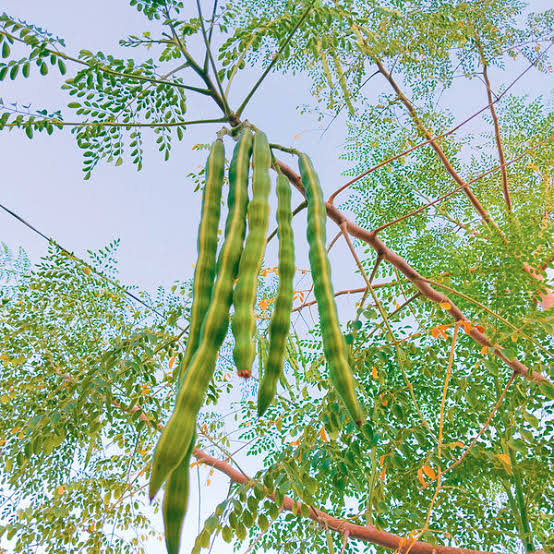
HOW MORINGA IS QUIETLY TRANSFORMING POULTRY AND LIVESTOCK FARMING
When we talk about agriculture revolution, we have to integrate what we find locally to our farming practice. Most times we tend to bypass plants and trees every day, without understanding the benefits they offer that would be of financial benefit for farmers, and nutritious for both livestock and human consumption. Africa has yet to discover its full potential with what it already has in its environment.
Across Sub-Sahara Africa, small holder livestock and poultry farmers tend to face challenges when it comes to feeds. The cost of commercial animal feeds are increasing by the day, making it unreliable for most farmers. Synthetic feed concentrates, maize meal, soybean meal, fishmeal and imported supplements tend to consume between 60-70 percent of farmer’s total production cost. For instance, a rural poultry farmer raising 200 broilers on a tight budget, with minimal finances to spare, one bad season, one price spike, one supply disruption may lead to an entire enterprise collapsing. Most farmers in Africa find themselves in a low-productivity trap, where they keep animals, but the animals underperform, where returns on investment is not evident. This is due to unaffordability of good feeds to help improve animal performance. This is a cycle that unfortunately repeats itself year after year, generation after generation.
Moringa Tree, is a practical solution, that is available, scientifically validated to help break the cycle of animal underperformance in farms. Its leaves are not only nutritious for humans, actually they are protein-rich, and its nutritional profile makes it the most ideal supplement. Moringa (Moringa oleifera) leaves contain all essential amino acids, including lysine and methionine, two amino acids that are chronically deficient in most African livestock diets and which directly govern muscle development, egg production, and immune function. They are also rich in beta-carotene, vitamin E, calcium, phosphorus, and a suite of bioactive compounds including isothiocyanates and flavonoids that have demonstrated antimicrobial and anti-inflammatory properties in multiple research settings. This means that Moringa is a better feed conversion that offers animals, stronger immunity, faster growth, and improved reproductive performance.
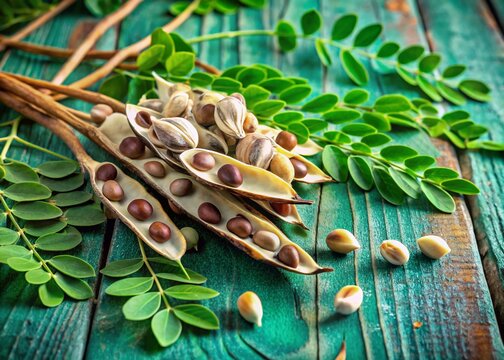
In most African countries, poultry farming is the entry point for smallholder farmers in Africa, this is because, it requires low start-up cost, faster returns and has a large and growing local demand. When you supplement your broiler diet with moringa leaf meal, it helps improve weight gain, ensures feed efficiency and maintains carcass quality without compromising meat taste and texture. For layer hens, Moringa supplement, helps increase egg production, improve York color intensity which helps attract premium prices, enhances eggshell thickness thus reducing breakage.
Moringa antimicrobial properties offer something that no synthetic feed additive can match in the context of Africa's poultry sector, a natural alternative to antibiotic growth promoters. With global export markets and increasingly health-conscious African urban consumers demanding antibiotic-free poultry products, Moringa positions smallholder farmers ahead of a regulatory and consumer curve that is already reshaping the global meat industry.
For livestock, Moringa tree is an essential supplement especially during dry seasons or in arid and semi-arid areas. Moring tree, is able to hold their leaves even in dry seasons, thus allowing farmers to still graze their livestock even during drought season. Cattles, supplemented with moringa foliage, produce more milk and have high conception rate. At a time where African farmers are struggling with easing cost of dairy meal and inconsistent access of quality concentrates, African farmers should consider growing their feeds on farm.
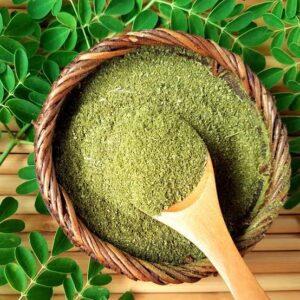
To ensure transformation within the poultry and livestock sector, Governments across Africa need to integrate Moringa into their national livestock development strategies, as a core component of feed security policy. Extension service officers, need to train small holder farmers, not just the growing of the Moringa tree, but how to process, formulate and integrate it into animal rations at the right inclusion rates. The banking sector, cooperative sector and microfinance institutions, ought to design credit products that support Moringa-linked poultry and livestock enterprises, recognizing them as bankable, viable and scalable businesses. African universities and research centers should as well continue to expand its research, findings, trials, agronomic studies and market systems analyses that will help build evidence that leads to policy changes and help acquire more data that gives more base on deeper learning.
There is a difference between a farming enterprise that survives and one that thrives, and in order to thrive, one needs a conducive environment, a market structure, and an investment ecosystem that recognizes farmers contribution in the food value chain and a government that allows farmers to scale without being burdened by high input costs. Investing in Moringa as a poultry or livestock farmer will greatly help your farm.
At Lekena Limited, we are committed to elevate farmers, highlighting the science, and the solutions that move Africa agriculture forward. From the small holder farm to the national policy table. Africa’s agriculture is a conversation that matters.